Introduction
Semantic SEO signals help you show that a page is genuinely useful, not just stuffed with repeated phrases. For US websites, that matters because searchers expect clear definitions, standard terminology, and practical answers that fit real-world context. If you are learning semantic seo signals for the first time, think of them as proof that your content deserves to be understood as relevant and complete, not merely keyword-heavy.
That is why teams use tools like Hovers to map topics, find missing entities, and tighten internal links before publishing. The goal is not to chase a mysterious “semantic score.” The goal is to make sure a page answers the query the way a real US reader expects, with enough context to remove doubt.

In this guide, you will see what semantic SEO signals are, why they matter for content quality, which ten signals matter most, and where the limits are. You will also get a quick checklist you can use before you publish or update a page.
What Are Semantic SEO Signals?
Semantic SEO signals are the pieces of evidence that show a page is meaningfully relevant and comprehensive for a topic. In plain language, they are the clues that tell search engines and readers, “this page really understands the subject.” That includes the right entities, the right subtopics, and direct answers to the query’s intent.
Definition in Plain Language
A strong semantic signal is not a single trick. It is a layer of evidence. For example, if a page about email marketing mentions deliverability, open rates, segmentation, consent, and unsubscribe rules, it looks more complete than a page that repeats “email marketing” ten times.
Semantic vs. Keyword Relevance
Keyword relevance says, “this page uses the phrase people searched.” Semantic relevance says, “this page also covers the concepts people expect around that phrase.” Those are related, but not the same. Keyword stuffing is not the goal, because repeating a term without adding context does not help users understand the page.
A useful rule is this: keywords get you in the conversation, but semantics helps prove you belong there.
How Search Engines Use Entities and Intent Matching
Search engines try to map a query to entities, concepts, and likely intent. If someone searches for “best payroll software for small business,” the engine looks for content that connects payroll, taxes, compliance, pricing, integrations, and small-business use cases. It is not just counting occurrences. It is checking whether the page fits the likely meaning behind the search.
A Simple Mental Model
Think of semantic signals as evidence layers:
- The page uses the expected terms
- The page connects those terms correctly
- The page answers the main question early
- The page covers the obvious follow-up questions
- The page feels complete for the audience
That is why semantic SEO does not replace keyword SEO. It refines what relevance means so the page matches both language and meaning.
Why Semantic SEO Signals Matter for Content Quality
Semantic signals matter because they raise confidence that a page satisfies the real intent behind a search. Clear concepts that are logically connected help readers quickly judge whether the page is worth trusting. Search engines can also match the page more accurately to related queries and variations, supporting topical relevance, entity relationships, and search intent matching.
Connect Signals to User Satisfaction and Intent Fulfillment
A page with strong semantic coverage usually answers the primary question faster, then supports it with context. That improves satisfaction because the reader does not have to guess whether the article will help them. For a US audience, that clarity matters even more when the topic includes pricing, policies, measurements, or state-specific rules. When you build content comprehensiveness around the entities and subtopics users expect, the page is more likely to feel complete and relevant across related queries.
Explain the Indirect Relationship to Rankings
Semantic signals do not rank a page by themselves. They influence the path to rankings by improving relevance understanding, which improves query matching, which can lead to better user outcomes. Google’s guidance on helpful content and people-first pages reinforces that quality is evaluated in broader context, not by one isolated tactic. See Google Search Central’s guidance on creating helpful, reliable, people-first content and the Search Quality Rater Guidelines for the larger quality picture.
https://developers.google.com/search/docs/fundamentals/creating-helpful-content
https://developers.google.com/search/docs/appearance/page-experience
US Content Quality Expectations
US readers usually expect plain language, standard units, familiar spelling, and practical detail. A finance page may need USD pricing, a health page may need careful definitions, and a local service page may need city or state context when the query implies it. Strong semantic signals help you meet those expectations without sounding robotic, because they align content comprehensiveness and topical relevance with what searchers actually mean in their search intent.
How Strong Signals Reduce Ambiguity
Clear entity relationships make the page easier to interpret. Instead of a vague article that mentions related terms randomly, the reader sees how the ideas fit together. That reduces ambiguity, improves scanability, and lowers the chance of edit churn later because the missing intent is easier to spot early. When content cohesively covers related entities and supporting concepts, it also helps ensure search intent matching across the variations people type.
Benefits: What You Gain When Your Signals Are Strong
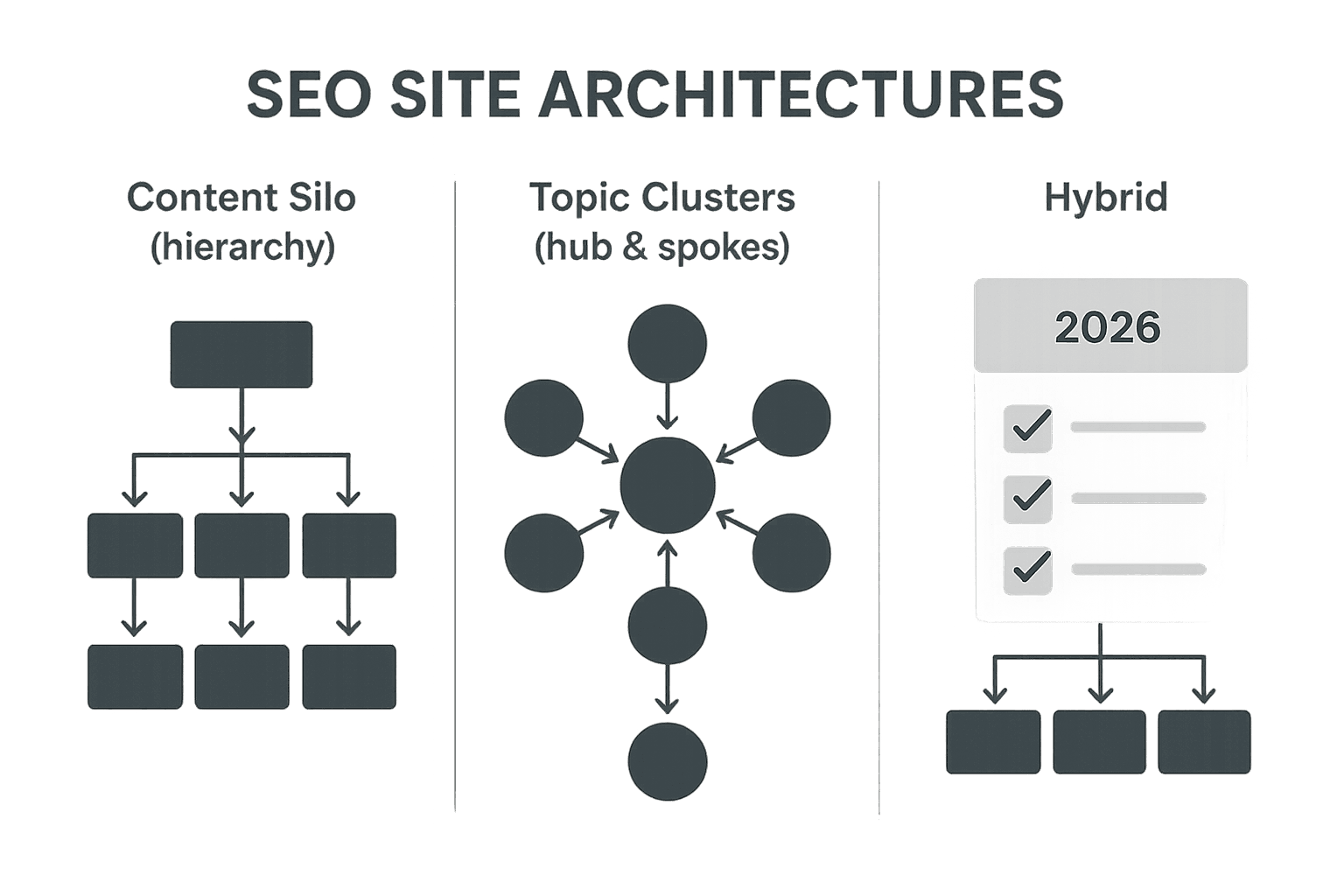
Strong semantic signals give you more than better wording. They help your content perform as a clearer answer to a broader set of related searches. That is especially valuable for topic clusters, where one page should cover one core intent without drifting off target.
Relevance Matching Improvements
When your content covers the expected entities and subtopics, it becomes easier to match to the right search variations. A single page can stay focused while still reflecting topic breadth. That balance is useful because it helps you answer the main query without flattening the page into a generic overview.
More Opportunities to Rank for Related Intents
Semantic coverage can make a page visible for adjacent questions, comparisons, and follow-up searches. For example, a guide about CRM software may also surface for queries about setup, integrations, pricing, or team size if those concepts are covered well. This is not about chasing random keywords. It is about earning more relevant matches.
Improved E-E-A-T Signals and Content Authority
Semantic signals can also strengthen how your expertise and trustworthiness are perceived. When your writing consistently covers key concepts, definitions, and supporting context (without contradictions or vagueness), it signals to both users and search engines that the page is grounded in real understanding—not just surface-level keyword targeting. For US audiences in particular, clear alignment with common terminology, standards, and expectations helps reinforce credibility and authority. Over time, pages that demonstrate strong semantic coverage tend to build greater content authority because they more reliably answer the full set of questions people have around a topic.
Better User Satisfaction
Readers stay longer when the page feels complete and easy to follow. Strong semantic signals support readability, clear structure, and fewer dead ends. That usually means fewer rewrites later because gaps in intent show up sooner in the draft process.
Stronger Content Defensibility Over Time
Content that addresses the right concepts tends to age better than content that only targets a phrase. US terminology changes, audience expectations shift, and competitors improve. Pages with broader semantic coverage are usually easier to refresh because the intent foundation is already solid. If you want a practical way to manage that at scale, Hovers can help identify missing topic coverage before a page goes live.
Top 10 Semantic SEO Signals for US Content Quality (With Examples)
Here is the practical list. Use these as evidence layers, not as a rigid formula.
1. Topic Entity Coverage
A page should mention the concepts people naturally expect around the topic. If you are writing about podcast hosting, that may include RSS feeds, distribution, analytics, storage, and monetization.
But for US content, the entity coverage needs to reflect what readers within that domain actually look for. For example:
- Finance / personal credit content (US): A page about improving credit scores shouldn’t just say “credit history.” It should include entities like FICO vs. VantageScore, credit utilization, payment history, hard inquiries, late payments, derogatory marks, credit report bureaus (Equifax, Experian, TransUnion), and ratios/metrics like debt-to-income (DTI) when discussing eligibility for credit products. If discussing credit cards, you’d also cover APR (annual percentage rate), intro APR offers, minimum payments, balance transfers, and annual fees.
- Tax content (US): A guide on “business deductions” should reference entities like Schedule C, qualified business income (QBI), IRS Form 1040, standard vs. itemized deductions (when relevant), and categories that map to US filing. It should distinguish federal income tax from state income tax and note that deduction rules can vary by state.
- E-commerce / returns policy content (US): A page about returns should cover entities like refund vs. exchange, restocking fees (where applicable), return windows (e.g., “30 days” as a common policy), shipping labels, and US consumer context like sales tax on refunds (how refunding affects tax totals).
Check yourself: Did I include the entities a knowledgeable reader would expect, or only the headline keyword?
2. Topical Alignment
The page should stay on one topic without drifting into loosely related ideas. A page about semantic SEO signals should not turn into a general SEO history lesson.
Check yourself: Does every section support the same core intent, or did I wander into unrelated territory?
3. Intent Matching
Answer the main question early, then support it with detail. If the query is informational, the page should define, explain, and clarify before it persuades.
Check yourself: Would a reader know within the first few paragraphs that this page solves their problem?
4. Entity Relationships and Context
Terms should connect in the right way. For example, “state tax,” “sales tax,” and “income tax” are related, but they are not interchangeable. Good semantic writing shows those distinctions clearly.
Check yourself: Did I explain how the terms relate, or did I list them like a bag of keywords?
To strengthen this signal with US-specific clarity, make sure relationships reflect how US people and systems use them. For instance:
- Sales vs. income tax: Explain that sales tax is typically applied at the point of purchase and collected from the buyer by the seller, while income tax is computed on earnings and filed (often at the federal level and then state).
- Credit metrics relationships: Clarify that credit utilization (balances vs. limits) influences credit scores, while payment history is a separate component—both affect scoring, but they’re not the same metric.
- Healthcare entities (if applicable): Distinguish in-network vs. out-of-network, deductibles, copays, and coinsurance—they describe different parts of the patient cost-sharing structure.
Check yourself: Did I explain how the terms relate, or did I list them like a bag of keywords?
5. Comprehensive Subtopic Coverage
Strong pages answer the likely follow-up questions, such as why it matters, how it works, when to use it, and what can go wrong. That is how you move from surface-level coverage to real usefulness.
Check yourself: If someone skimmed the page, would they still understand the obvious next questions?
To make this more domain-specific for US readers, include subtopics that match common “next clicks” in that category. For example:
- Podcast hosting: cover how RSS feeds sync, episode publishing cadence, analytics dashboards (downloads, geographic breakdown), monetization options (ads, sponsorship, premium subscriptions), and distribution considerations (platform compatibility, episode approval timelines).
- US credit/finance: cover how to dispute errors, how utilization changes month-to-month, what hard inquiries mean, how DTI affects lending decisions, and common pitfalls like “closing cards reduces available credit” (impact varies, explain the nuance).
- Local service pages: cover service areas vs. city coverage, typical timelines, pricing model (flat rate vs. hourly), and warranty/guarantee terms.
Check yourself: If someone skimmed the page, would they still understand the obvious next questions?
6. US Content Conventions
US content should match local expectations for language and examples (for example, using US-specific references like dollars, ZIP codes, and familiar terms).
Check yourself: Did I write for a US audience in a way that feels familiar, specific, and accurate?
For better US signal strength, align conventions with typical US user tasks:
- US addresses and location patterns: use ZIP codes, neighborhoods, and “near me” intent correctly (and avoid mismatching geography like city/state vs. county).
- US money language: specify dollars ($), commonly used billing terms (e.g., “monthly billing,” “annual plan”), and avoid currency ambiguity.
- Regulatory or practical references: when relevant, cite IRS forms for tax topics, or state-specific context when discussing state requirements.
Check yourself: Did I write for a US audience in a way that feels familiar, specific, and accurate?
7. Clear Definitions Up Front
Definitions help search engines and readers resolve ambiguity fast. If a term can mean different things, define it before you build the rest of the article.
Check yourself: Did I define the core concept in simple language before adding nuance?
To improve semantic completeness, define the US-relevant interpretation. Examples:
- APR vs. interest rate: define APR as the standardized annualized cost metric (often including certain fees) rather than just “the interest rate.”
- DTI: define debt-to-income as household debt payments relative to gross monthly income, and clarify where it’s used (e.g., lending/underwriting).
- Healthcare cost terms: define deductible, copay, and coinsurance in plain language before comparing scenarios.
Check yourself: Did I define the core concept in simple language before adding nuance?
8. Internal Link Context
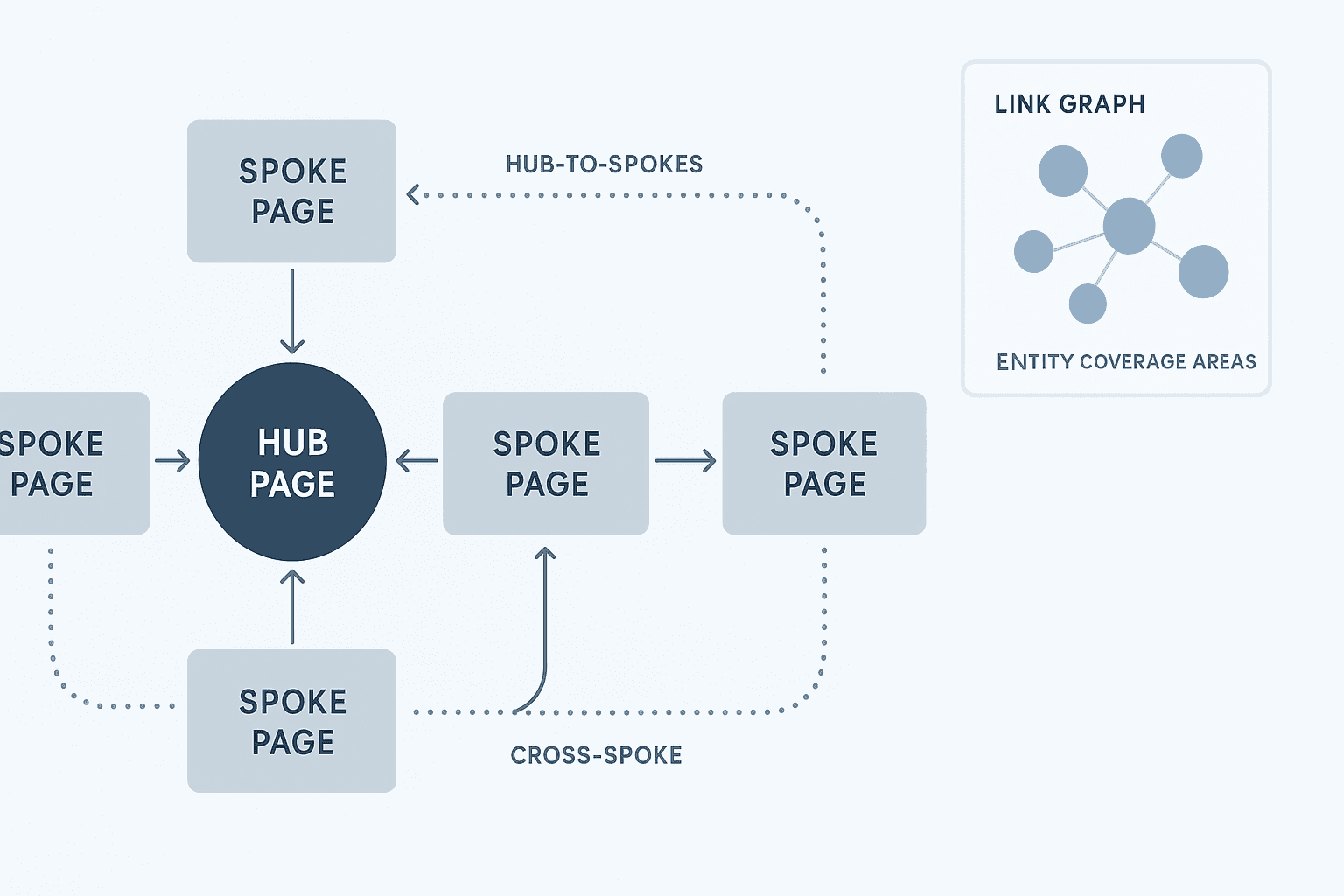
Links to related pages help reinforce entity relationships and topic structure. A page about semantic SEO signals should point to related guides on topical authority, internal linking, or content planning when those pages genuinely add value.
Check yourself: Did I connect this page to the rest of the topic cluster in a meaningful way?
Strengthen this by linking with context that matches how US users consume information:
- Link from a “definitions” paragraph to a deeper guide that expands the same entities (e.g., “APR” → “How credit card APR works” rather than a generic money blog).
- Link from “examples” to supporting pages that show US-specific scenarios (e.g., a local service guide linking to pages that show service-area coverage and pricing models used in your region).
Check yourself: Did I connect this page to the rest of the topic cluster in a meaningful way?
9. Examples That Match the Audience
Examples should reflect the audience’s world. A B2B page may need software, pricing, and procurement examples. A local service page may need city-level context and service-area language.
Check yourself: Are my examples specific enough to be useful for US readers, or too generic to teach anything?
Make examples concrete with domain-specific entities and realistic US constraints:
- Finance: example walkthroughs that include credit score ranges, credit utilization percentages, sample DTI math, or how an intro APR expiration affects the total cost.
- Tax: examples that reference typical IRS forms and the kind of deduction that applies (and what documentation is commonly required).
- Local services: examples that mention service radius, “arrives within X hours,” and how quoting works (e.g., labor + materials), rather than vague “we serve customers.”
Check yourself: Are my examples specific enough to be useful for US readers, or too generic to teach anything?
10. Direct Answer Evidence
The page should show proof that it answered the query, not just talked around it. That can come from comparisons, steps, FAQs, definitions, or concise summaries placed where readers need them.
Check yourself: Can a reader point to the paragraph that directly answers their question?
To make direct answers stronger in US-focused content, include evidence elements that map to how users decide quickly:
- A short “If you’re trying to do X, do Y” step list that references the relevant US entity (e.g., a checklist for what credit reports to review—Experian/Equifax/TransUnion).
- A FAQ that resolves common US-specific confusion (e.g., refund timing expectations for US e-commerce, or how state vs. federal rules differ).
- A comparison table that shows differences in US terms (e.g., APR vs. interest rate, deductible vs. copay, sales tax vs. income tax) so the “answer” is visible at a glance.
Check yourself: Can a reader point to the paragraph that directly answers their question?
Limitations: What Semantic SEO Signals Can’t Guarantee
Semantic signals improve clarity and relevance, but they do not guarantee a top ranking. A page can be well structured and still underperform if other parts of SEO are weak. That is the part many creators miss.
No Single Semantic Score
Google does not publish a public “semantic score.” There is no official number you can optimize for, and there is no reliable shortcut that says “reach 87 and you win.” You are looking for evidence of relevance, not a magic metric.
Multi-Factor Reality
Semantic strength cannot fully fix crawl problems, poor internal linking, thin authority, slow pages, weak backlinks, or bad user experience. Those issues can hold a good page back. In other words, strong signals help matching, but they do not remove the need for technical health and authority.
Avoid Over-Optimizing
One common mistake is stuffing in extra entities just to look complete. That can make the article harder to read and less trustworthy. More terms are not always better. Better coverage is better.
How to Evaluate Strength
Look for clarity, coverage, and direct answer evidence. Then ask whether the page feels complete for the target intent. Counted entities matter less than whether the page actually resolves the searcher’s problem.
Timelines Take Time
After edits, pages need time to be recrawled and re-evaluated. Improvements do not always show up immediately. Track a set of queries that match the page’s intent, then measure change over time instead of expecting an instant jump.
Use Cases: Where These Signals Show Up in Real US Content
Semantic signals appear differently depending on the page type, but the goal stays the same: help the page express the right meaning for the right audience.
Blog Posts
Blog posts usually show semantic strength through definitions, examples, comparisons, and follow-up coverage. A strong article on remote work policies, for instance, may cover eligibility, scheduling, communication norms, and compliance concerns without losing the main thread.
Landing Pages
Landing pages show intent matching through a clear value proposition and relevant usage context. If the page is for US startups, it should explain who the product is for, what problem it solves, and when it is a fit. The page should not bury the offer under vague marketing language.
Product and Support Pages
Product and support pages often demonstrate comprehensiveness through specs, FAQs, troubleshooting paths, and compatibility notes. Those details are semantic evidence because they help users understand what the product is, how it works, and what to do next.
Quick Editing Workflow
A simple workflow keeps the process practical:
- Identify missing entities
- Add sections that complete the intent
- Tighten definitions and examples
- Check readability and flow
- Confirm the page still stays on topic
If you want to scale that workflow across a content library, this platform can help you find gaps faster and connect related pages more cleanly.
A Simple Semantic Evidence Checklist You Can Use Before Publishing
Use this checklist to audit one page before it goes live. If you can answer “yes” to most of these items, your page likely has strong semantic evidence.
- The main topic is defined in the opening section
- The page uses the entities readers expect
- The content stays focused on one intent
- Related concepts are explained, not just named
- Follow-up questions are answered in the body
- US terminology, units, and examples feel natural
- The page includes at least one concrete example
- The structure makes the answer easy to scan
- Internal links reinforce related entities
- The page reads like a complete answer, not a keyword list
If three or more of these are weak, revise the intent gaps first. Do not start by adding more keywords. Start by adding meaning.
Frequently Asked Questions
Are semantic SEO signals the same as Google’s ranking factors?
Not exactly. Semantic SEO signals are evidence that your page is relevant and complete. Google’s ranking systems use many signals together, so semantic strength helps, but it is not the whole system.
How do I measure whether my semantic signals are strong?
Use a “coverage” check instead of guessing. Look for (1) whether the page satisfies all key sub-questions for the search intent, (2) whether important concepts and entities are mentioned in a way that matches common terminology, and (3) whether supporting details (definitions, steps, examples, comparisons) are present where readers expect them. Tools that help with this include entity/keyword gap analyses and content audits that surface missing related terms and unanswered queries.
What tools help identify missing entities or concepts?
Start with entity/related-concept discovery from SEO suites (keyword/entity tools), then validate with SERP review and “people also ask”/related searches. After that, confirm with your own reader workflow: if someone reading your page would still ask specific follow-up questions, you likely have an entity or concept coverage gap.
Can I improve semantic SEO without adding more words?
Yes. You can improve clarity by reorganizing sections, defining terms earlier, adding better examples, and removing fluff. Sometimes the strongest semantic improvement comes from editing, not expanding.
What’s the fastest way to spot semantic intent gaps in existing content?
Read the page as if you were the searcher and ask, “What would I still need to know after this?” Then compare that answer to the page’s sections. Missing follow-up questions usually reveal the gap quickly.
Do semantic SEO signals matter more for YMYL topics than others?
They matter everywhere, but they are especially important for Your Money or Your Life topics because accuracy and completeness are critical. In those cases, clear definitions, careful wording, and correct terminology matter even more.
Conclusion
Semantic SEO signals help US content earn trust by showing real topic understanding, not just repeated phrases. When your page covers the right entities, matches the intent early, and uses familiar US conventions, it becomes easier for both readers and search engines to see its value. The important limit is simple: these signals support rankings, but they do not guarantee them.
The best next step is practical. Audit one existing US page, mark which of the ten signals are strong and which are missing, then fix the intent gaps first. After that, track before-and-after performance for the full query set that matches the page’s target intent, not just one keyword. If you want help scaling that process, Hovers can give you a faster way to spot missing semantic evidence and turn it into cleaner content decisions.