Why Topic Clusters Matter for SEO (and What to Watch For)
If you already know the basics, here is the blunt version: topic clusters for SEO work when they help search engines and humans understand a subject faster. They are not a ranking hack. They are an information architecture strategy that improves intent coverage, internal link discovery, and content differentiation.
That is why the skepticism you see in SEO communities is fair. In r/TechSEO threads, people keep asking whether clustering is necessary, and the honest answer is this: it is only useful when the cluster is built around a real search need, not when it is forced into every content plan. A weak cluster is just a pile of related posts. A strong cluster is a clean map of one subject, one hub, and several focused spokes.
If you want the broader framework, the pillar page, Complete Guide to Topic Clusters for Digital SEO Success, covers the strategy at a higher level. This article goes one layer deeper and focuses on execution, linking, and measurement.

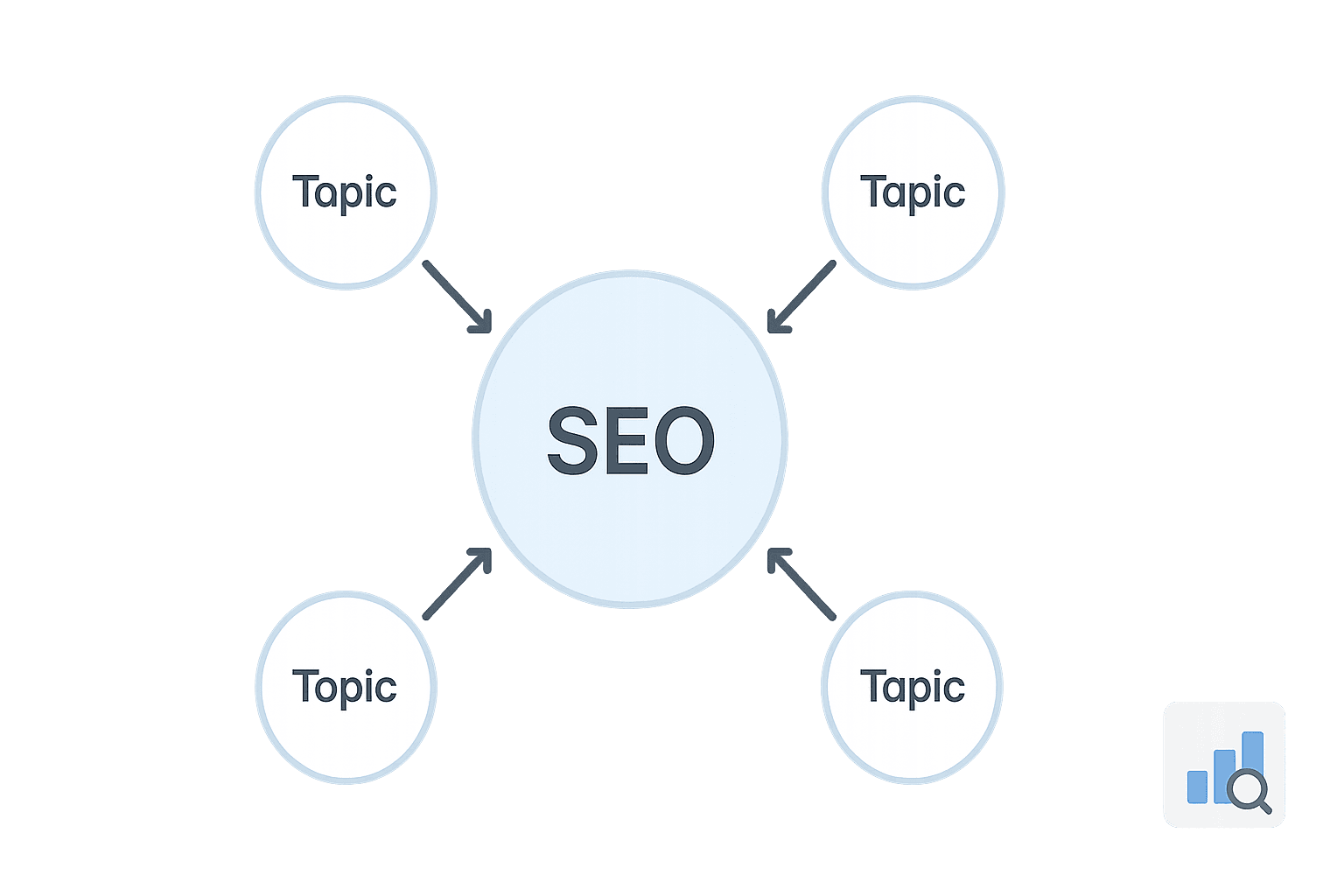
A topic cluster turns one broad keyword into a connected set of pages that cover the full search intent.
Google’s own guidance on helpful content and SEO basics supports this idea indirectly: make it easy to understand what a page is about, write for people first, and organize content so the right page satisfies the right query. See the Google Search Central SEO Starter Guide and Google Search Console performance report help.
How To Build A Topic Cluster From One Keyword (Execution Workflow)
The fastest way to build a cluster is not to start writing. It is to map intent first, then decide what belongs on the hub and what deserves its own spoke. That keeps your pages distinct and prevents cannibalization later.
-
Start with one seed keyword.
Pick a broad term that can support multiple search intents. For example, a seed like “topic clusters for SEO” can lead to definitions, planning, internal linking, measurement, and common mistakes. -
Collect the SERP patterns.
Scan the top results and note the recurring angles. Are results mostly how-to guides, definitions, templates, or tool-driven workflows? That tells you which subtopics searchers actually want. -
Group queries by intent.
Put related queries into buckets such as definition, process, examples, measurement, and troubleshooting. This is where you see the cluster shape emerge. Hovers.ai can accelerate this step by starting from a single keyword and turning it into a semantic map, which is useful when you need speed without losing structure. -
Assign one purpose to each page.
The hub should handle the broad, high-level explanation. Each spoke should own one narrow job. Do not let two pages answer the same question in slightly different words. -
Write a content brief for each page.
Each brief should include the target intent, supporting entities, subheadings, and the exact angle that makes the page unique. -
Plan the internal links before you draft.
Decide where the hub points to spokes, where spokes point back, and where sibling spokes should link to each other if the connection is genuinely useful. -
Publish in a sequence.
Launch the hub first, then the highest-priority spokes. That gives the cluster a clear center from day one.
Step 1: Intent Research And Subtopic Mapping
Intent research should answer one question: what does the searcher need this page to do? If the answer is “learn,” “compare,” “solve,” or “measure,” you have a content direction. If the answer is fuzzy, the keyword is not ready for a standalone page yet.
A simple mapping method works well:
- Hub intent: broad explanation of the topic
- Spoke intent: one narrow sub-question or task
- Overlap check: two pages should not satisfy the same query with the same structure
This is where you avoid content cannibalization. If two pages would rank for the same query and one can answer the full intent better, merge them or narrow one page until the separation is obvious.
Step 2: Hub And Spoke Planning That Prevents Cannibalization
The hub should not become a junk drawer. Its job is to orient the reader, define the subject, and point to deeper pages. The spokes should not act like mini-hubs either. Each one should stay focused.
Use this rule: if a page can be summarized in one sentence, it is probably a spoke. If it needs several subtopics to make sense, it is probably a hub. That distinction keeps your cluster clean as you scale.
Internal Linking Rules For Hub-To-Spoke And Spoke-To-Hub SEO
Internal links are what make a topic cluster feel like a cluster. Without them, you just have related content living on the same site. With them, you create a path that helps users move through the topic and helps search engines see the relationship between pages.
The best linking strategy is simple and editorial. Link where it helps the reader move to the next logical answer. Do not add links because a checklist told you to hit a number. That kind of over-optimization looks artificial and usually adds noise.
A practical structure looks like this:
- The hub links to every important spoke using descriptive anchor text.
- Each spoke links back to the hub using a natural phrase that reflects the hub’s role.
- When two spokes are genuinely connected, they can link to each other, but only if the link helps the reader.
For example, the hub might use anchor text like “how to measure topic cluster performance” or “internal linking rules for clusters.” A spoke might link back with phrases like “the full topic cluster framework” or “our main guide to topic clusters.” That language feels natural because it matches the reader’s next step.
Anchor Text And Navigation Patterns That Stay Natural
Anchor text should describe the destination, not force the keyword. If every link uses the exact same phrase, you flatten the cluster and make the copy sound machine-written. Variation is healthy when the destination is clear.
Good navigation patterns include:
- Hub intro links to the most important spoke pages
- Spoke intro or conclusion links back to the hub
- Inline links appear where a reader would naturally want more detail
- Navigation text matches the page’s real function
This is also where your site architecture matters. If a page is buried too deep, the cluster loses strength because discovery becomes harder. The point is not to stuff pages with links. The point is to create a useful route through the topic.
What To Link And What Not To Strengthen Semantic Relationships
Link to pages that add context, answer the next question, or explain a related concept. Do not link to pages that are only loosely related or that repeat the same content in a different format.
Avoid these mistakes:
- Linking every mention of a keyword
- Using the same anchor text on every page
- Pointing several pages to the same subtopic without a clear hierarchy
- Linking to thin pages that do not yet deserve a place in the cluster
One useful internal resource here is your own process content. If you maintain a workflow page or editorial standards page, link to it only when it helps the reader understand how the cluster is built. For example, you can reference our editorial workflow when explaining how briefs and internal links are planned, but keep the link sparse and relevant.
Content Creation For Clusters: Coverage, Entities, And Quality Control
Strong cluster content does three things well. It covers the right subtopic, it includes the entities and concepts search engines expect, and it says something distinct. If a spoke is just a thinner version of the hub, it adds little value.
Coverage means the page answers the query fully. Entities mean the page includes related terms and concepts that help define the subject. Unique angle means the page contributes a specific perspective, workflow, or example that the hub does not already cover.
That matters because topical authority is built from clarity, not volume. You want each page to feel complete on its own and useful as part of the set.
A good quality control pass asks:
- Does this page own one intent?
- Does it introduce new information, not recycled wording?
- Does it include enough supporting entities to feel credible?
- Does it avoid repeating the hub’s exact structure?
- Does it add a practical angle the reader can use?
If you skip that review, clusters tend to fail in the same way. The hub gets bloated. Spokes overlap. The site feels repetitive. Search engines then have a harder time telling which page should rank.
A clean cluster usually has one hub that stays broad and several spokes that stay sharp. That balance is what makes the whole structure work.
How To Measure Topic Cluster Performance In Google Search Console
Google Search Console is where you test whether the cluster is doing real work. You are not looking for vanity movement on one page. You are looking for improvement across the group.
Start by tracking pages and queries at the cluster level, not one URL at a time. That means grouping the hub and its spokes together, then asking whether the group is gaining visibility for the target theme. This is the most useful view because clusters often show progress before any single page looks like a breakout winner.
Build A Cluster-Level Reporting View (Queries, Pages, Impressions)
Create a simple reporting sheet with these fields:
- Cluster name
- Hub URL
- Spoke URLs
- Primary query groups
- Impressions by page
- Clicks by page
- Average position by query group
- Notes on coverage gaps
Then review the data in GSC by page and query. Look for query clusters that repeat across the hub and spokes. If one page is stealing impressions from another, you may have cannibalization. If a spoke is getting impressions for a subtopic the hub should own, that may be a sign the hierarchy needs adjustment.

Cluster-level reporting helps you see whether the topic set is expanding visibility as a group.
For guidance on using GSC data well, the Search Console help center is the right reference point. Use it to understand which queries and pages are actually getting exposure.
Use Feedback Loops To Refresh Hubs And Expand Spokes
Measurement should lead to action. If the hub is getting impressions but low clicks, rewrite the title and intro so it better matches search intent. If a spoke is ranking for a related subtopic you have not covered elsewhere, consider adding a new page or expanding the existing one.
Watch for early signals before rankings fully move:
- More impressions across the cluster
- New query variations showing up
- Improved visibility for long-tail terms
- A spoke beginning to support queries the hub cannot fully satisfy
- Better internal discovery, seen in more pages receiving impressions
That is the point where cluster work starts paying off. Not because the pages are magically connected, but because the site now covers the topic more completely.
Common Topic Cluster Mistakes (And How To Fix Them)
The most common mistake is building a cluster with no real hierarchy. If every page tries to be a hub, the structure collapses. Fix it by assigning one true hub and making every other page serve a narrower job.
Another common failure is overstuffing the hub with too much detail. That turns it into a weak generalist page instead of a clear entry point. Keep the hub focused on the overview and move depth into the spokes.
A third problem is isolated posts that never link back into the system. Those pages may be good on their own, but they do not strengthen topical authority. Add editorially justified links both ways, then make sure the anchor text reflects the relationship.
Finally, many teams ignore entity coverage. They write the obvious points, skip the supporting concepts, and wonder why the page feels thin. Fix that by checking what terms, questions, and subtopics are common across the SERP, then include the ones that genuinely belong.
Conclusion: Your Next Cluster Sprint
Topic clusters work when they improve coverage, make internal discovery easier, and help each page play a distinct role. They fail when they are treated like a template instead of a system. The smart move is to start small, keep the hierarchy clean, and measure the cluster as a group in Google Search Console.
If you want a practical next step, run a two-week cluster sprint: pick one seed keyword, map intents, draft one hub and four spokes, interlink them, then review GSC query clusters each week. If you want to move faster on research, briefs, and internal linking, try Hovers.ai to generate and continuously improve topic clusters from a single keyword. That is the easiest way to turn topic clusters for SEO into a repeatable workflow instead of a theory.