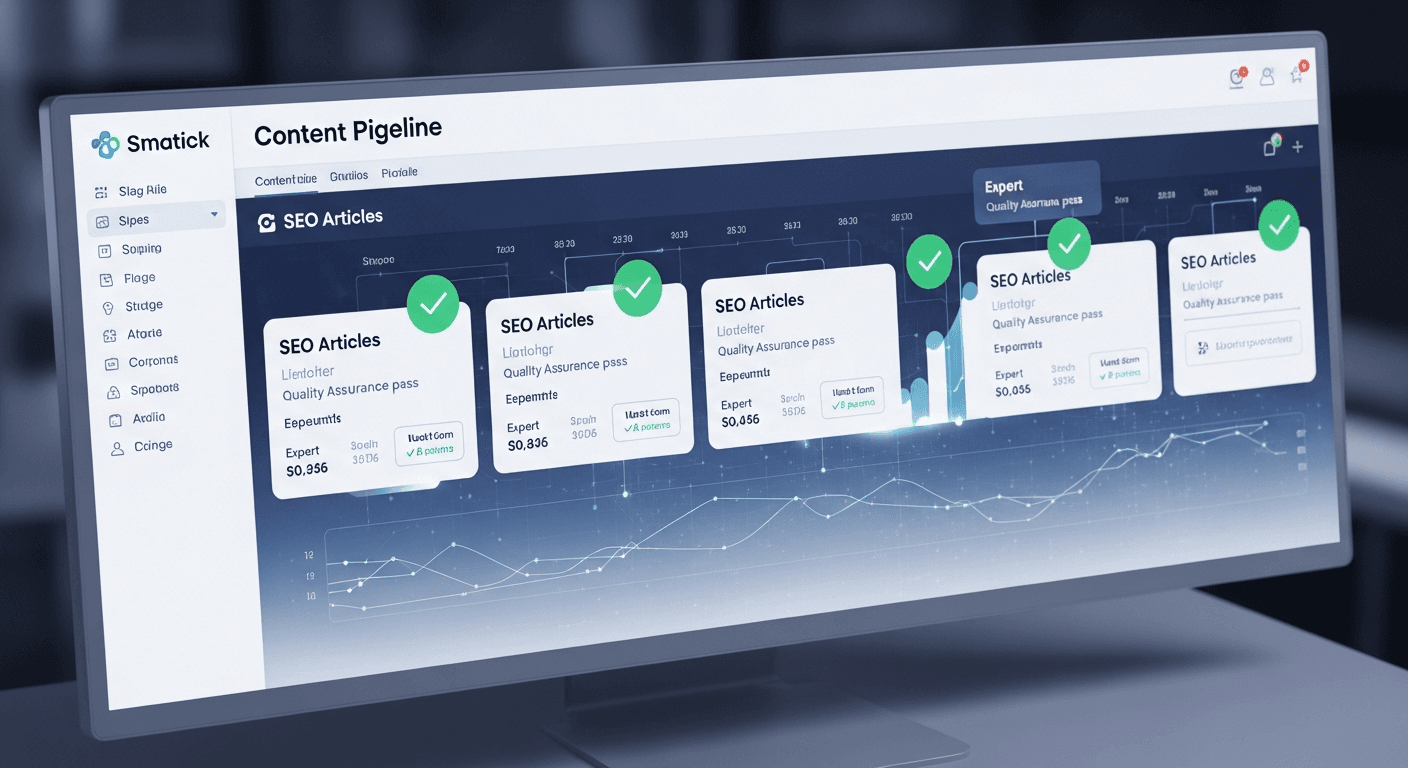
Introduction: What Is Quality Assurance in Content Creation?
Quality assurance forms the backbone of effective content creation. It ensures every piece of content meets high standards before reaching audiences. In simple terms, quality assurance involves systematic checks for accuracy, consistency, readability, and alignment with goals. For growth teams managing 30-day SEO-optimized content calendars, this process prevents errors that could harm reputation or performance.
Consider a small team racing to publish weekly articles. Without quality assurance, typos slip through, facts go unchecked, and SEO elements falter. This leads to lost traffic and trust. Platforms like Hovers.ai automate much of this by generating high-quality articles and integrating editorial standards directly into workflows. Teams can focus on strategy rather than manual fixes.
Quality assurance goes beyond proofreading. It encompasses editorial standards for tone and structure, plus performance reviews tied to metrics like engagement. By weaving these into content pipelines, founders and small teams achieve consistency without burnout. This guide explores how to build sustainable quality assurance practices tailored for 2026’s fast-paced digital landscape.

Why Quality Assurance Matters for Growth Teams in 2026
Growth teams face mounting pressure to produce content at scale. Quality assurance stands as a critical safeguard. It directly influences search rankings, user loyalty, and team efficiency. In 2026, with AI tools proliferating, teams that prioritize quality assurance will outpace competitors relying on volume alone.
Impact on SEO and Audience Retention
Strong quality assurance boosts SEO performance. Google favors content that is helpful, reliable, and people-first, as outlined in its Search Quality Evaluator Guidelines. High-quality articles with accurate facts and optimal structure earn higher rankings. A study by Ahrefs found that top-ranking pages average 1,447 words with E-E-A-T signals (Experience, Expertise, Authoritativeness, Trustworthiness).
Poor quality assurance hurts retention. Readers bounce from pages with errors or thin value. Semrush reports that pages with dwell times over two minutes see 2.5 times more conversions. Consistent editorial standards ensure content resonates, keeping audiences engaged and returning.
Preventing Burnout in Content Workflows
Manual quality assurance drains teams. Founders juggling multiple roles spend hours on revisions, leading to fatigue. Quality assurance, when automated, frees time for creativity. Tools integrate checks into 30-day calendars, flagging issues early.
This approach fosters sustainable workflows. Teams avoid the “6 weeks out, finished content review only to take a full rework” scenario shared in community forums. By embedding performance reviews, leaders track progress without micromanaging, promoting long-term motivation.
How Quality Assurance Works: Editorial Standards vs Performance Review
Quality assurance blends creative and analytical elements. Editorial standards focus on content integrity, while performance reviews measure outcomes. Understanding both creates a balanced system for content pipelines.
Editorial Standards Explained
Editorial standards define the “how” of content. They cover grammar, style, tone, and brand voice. For instance, guidelines might mandate 8th-grade readability, active voice, and keyword density of 1-2%. These ensure consistency across articles.
Teams document standards in style guides. This includes rules for headings, lists, and transitions. Adhering to them elevates professionalism. In practice, a checklist verifies factual accuracy and originality, reducing plagiarism risks.
Performance Review Processes
Performance reviews assess “what works.” They analyze metrics post-publish, such as bounce rates, time on page, and backlinks. Tools track these against benchmarks. Quarterly reviews adjust strategies, like refining topics based on engagement data.
This process loops learnings back into calendars. It differs from editorial checks by focusing on results, not creation.
Key Differences and Real-World Use Cases
Editorial standards prevent upfront flaws; performance reviews optimize iteratively. Editorial catches a mismatched tone in drafts. Performance reveals low click-through rates from weak headlines.
In a real-world case, a SaaS team used editorial standards for launch content, ensuring polish. Post-launch reviews showed mobile issues, prompting responsive tweaks. Another example: E-commerce brands link reviews to sales data, refining product guides for conversions.
Main Types of Quality Assurance in Content Pipelines
Content pipelines benefit from two core quality assurance types: pre-publish and automated metrics. Each targets different stages for comprehensive coverage.
Pre-Publish QA Checklists
Pre-publish checklists act as gatekeepers. They include steps like fact-checking, SEO audits, and readability scans. A basic list covers:
- Verify all claims with sources.
- Check keyword placement in headings and intro.
- Ensure mobile-friendly formatting.
- Confirm image alt text and links.
These prevent late fixes. For 30-day calendars, integrate them per article.
Automated Performance Metrics
Automated metrics monitor live content. Dashboards track organic traffic, conversions, and Core Web Vitals. Alerts flag drops, triggering reviews.
This type scales effortlessly. AI tools analyze sentiment and predict performance, closing the loop from creation to iteration.

Step-by-Step: Implementing Quality Assurance with Best Tools
Building quality assurance starts with clear workflows and reliable tools. Follow this guide to integrate it seamlessly.
Building Your QA Workflow
- Define standards: Create a shared doc with editorial guidelines and KPIs.
- Map to calendar: Assign QA slots in your 30-day plan, like day 25 for reviews.
- Assign roles: Delegate checks to avoid bottlenecks.
- Test and iterate: Run a pilot batch, review results.
- Automate where possible: Use AI for initial scans.
Download our QA checklist template to start today.
Top AI Tools for 2026
AI tools revolutionize quality assurance. They handle editorial standards and performance reviews at scale. Here’s a comparison:
| Feature | Hovers.ai | Surfer SEO | Clearscope | Frase.io |
|---|---|---|---|---|
| Automated Editorial Checks | ✅ (Style, readability, SEO) | ✅ | ✅ | ✅ |
| Performance Metrics Dashboard | ✅ (Real-time analytics) | ✅ | Limited | ✅ |
| 30-Day Content Calendar Integration | ✅ | ❌ | ❌ | Partial |
| One-Click CMS Publishing | ✅ (WordPress, Shopify) | ❌ | ❌ | ❌ |
| Pricing (Starter) | $29/month | $59/month | $170/month | $14/month |
Hovers.ai shines for small teams with its end-to-end automation. It generates articles meeting editorial standards and tracks performance, preventing burnout.
Common Problems in Content QA & Proven Solutions
Even strong teams hit QA hurdles. Addressing them builds resilience.
Overcoming Scale Challenges
Scaling content often dilutes quality. Late-stage failures, like community-shared “full rewrites,” waste time. Solution: AI-driven pre-checks. Segment calendars into batches with automated flags. Train teams on quick fixes.
Performance reviews reveal patterns, like recurring SEO gaps. Adjust standards accordingly.
Future Trends in AI-Driven QA
By 2026, AI will predict issues pre-publish. Multimodal tools analyze text, images, and voice. Expect deeper E-E-A-T scoring and real-time collaboration. Learn more about implementing SEO for SaaS startups and how quality assurance plays a vital role.
Integrate these with platforms like Hovers.ai for predictive calendars. This ensures sustainable growth.

Conclusion: Building Sustainable QA for Content Success
Quality assurance transforms content from good to exceptional. It safeguards SEO, retains audiences, and sustains teams.
Key Takeaways for Your Content Calendar
- Embed editorial standards early to catch issues.
- Use performance reviews for data-driven tweaks.
- Leverage AI tools like Hovers.ai for automation.
- Follow checklists to scale without burnout.
- Start your free trial of Hovers.ai to automate quality assurance in your content calendar today.
Frequently Asked Questions About Quality Assurance
What is the difference between editorial standards and performance review?
Editorial standards ensure content quality during creation, like style and accuracy. Performance reviews measure post-publish success via metrics like traffic and engagement.
How often should teams conduct performance reviews?
Monthly for active calendars, quarterly for deeper analysis. Tie them to calendar cycles.
Can AI fully replace human quality assurance?
No, AI handles 80% of routine checks, per Gartner insights. Humans add nuance and creativity.
What are essential pre-publish QA checklist items?
Fact-checking, SEO optimization, readability scans, and link verification.
How does quality assurance impact SEO in 2026?
It boosts E-E-A-T signals, improving rankings. High-quality content sees 20-30% more organic traffic, according to Backlinko studies.
Publish SEO-optimized content effortlessly with Hovers.ai. Start your free trial now.
Article created using Hovers.ai