Understanding Interactive Content
Definition of Interactive Content
Interactive content is any digital material that requires active participation from users rather than passive consumption. Unlike traditional static content that audiences simply read or watch, interactive content invites engagement, demands decisions, and responds to user input. Think of it as the difference between watching a movie trailer (passive) versus choosing your own adventure in a streaming series (active).
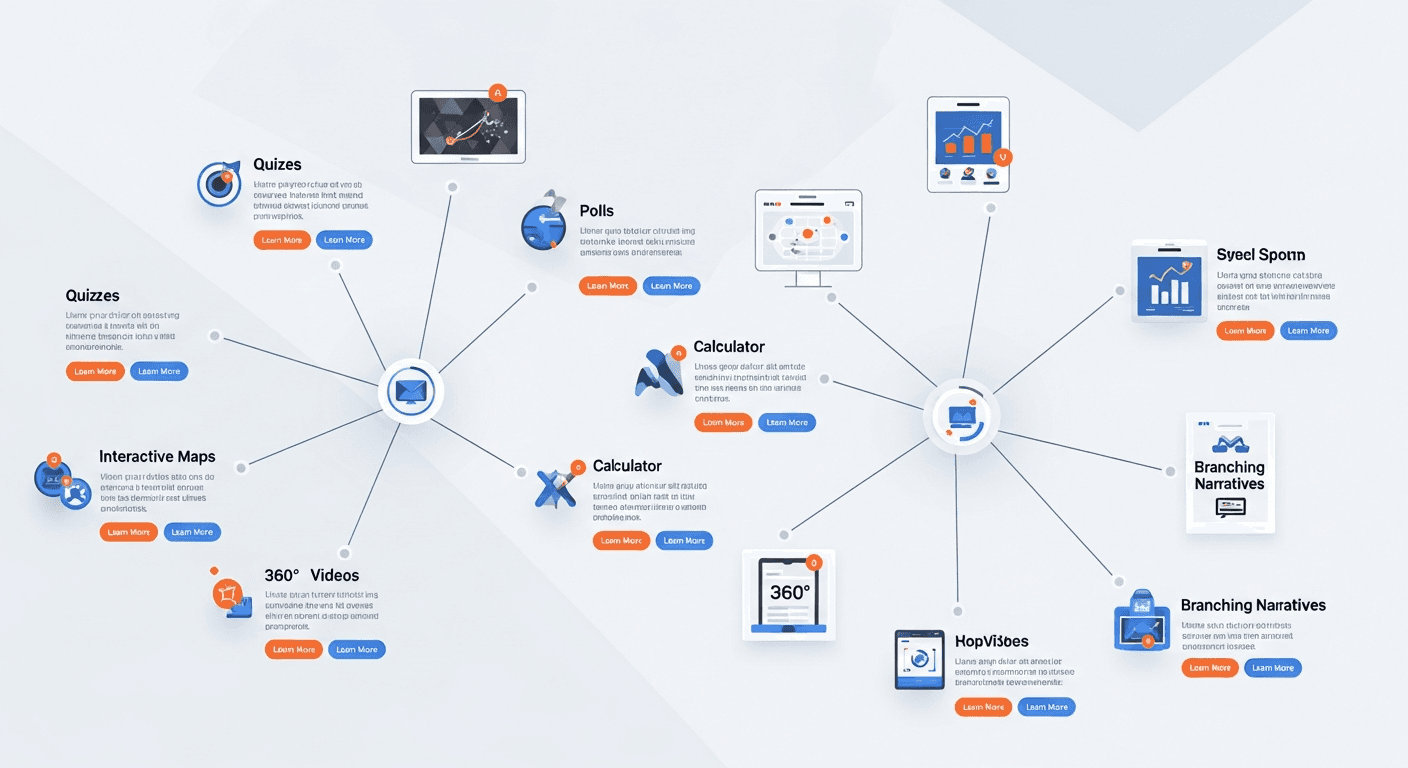
Interactive content can take many forms: quizzes that test knowledge, calculators that provide personalized results, polls that gather opinions, videos where viewers click to explore different storylines, infographics that reveal information on hover, and games that reward participation. The common thread? Users aren’t just receiving information; they’re actively shaping their experience.
The mechanics behind interactive content leverage user behavior psychology. When people participate, they feel invested. They’re more likely to remember your message, share it with others, and return for more. This fundamental shift from passive consumption to active participation marks the difference between content that gets scrolled past and content that gets engagement.

In today’s attention economy, where audiences are drowning in information, interactive content acts as a beacon. It cuts through noise by offering something different. It rewards attention with tangible value, whether that’s entertainment, personalized insights, or practical solutions. This isn’t just a nice-to-have feature for modern marketing; it’s becoming a necessity for brands serious about standing out.
Importance of Interactive Content in Marketing
The numbers tell a compelling story. Interactive content generates 2x more conversions than passive content, according to multiple industry studies. Engagement rates for interactive content are 5 times higher than static alternatives. These aren’t marginal improvements; they’re transformative results that directly impact your bottom line.
Why? Several factors converge to make interactive content a marketing powerhouse. First, interactivity demands attention in ways passive content simply cannot. Your audience is choosing to spend time with your brand, making deliberate decisions within your content. That engagement signals genuine interest to algorithms and to your audience themselves.
Second, interactive content creates data opportunities that passive content cannot match. When someone fills out a quiz or uses your calculator, you’re collecting zero-party data. You’re learning about their preferences, pain points, and needs directly from them, not inferring from behavior. This data becomes invaluable for personalization and targeting.
Third, there’s a psychological principle at play called the “endowment effect.” People value things more when they’ve invested effort into them. An interactive quiz result feels more personal than a standard blog post recommendation. A customized assessment resonates more than generic advice. By inviting participation, you’re increasing perceived value.
In competitive markets where differentiation matters, interactive content gives you an edge. It signals innovation and customer-centricity. It shows you’re not just broadcasting; you’re in conversation with your audience.
Types of Interactive Content
Interactive Infographics
Interactive infographics elevate data visualization from static images to engaging experiences. Rather than presenting all information at once, interactive infographics reveal data progressively, allowing users to explore what interests them most.
Imagine a traditional infographic showing global coffee consumption by country, complete with comparative statistics and trend lines. Now imagine that same data as an interactive infographic where users hover over countries to see detailed statistics, click to filter by time period, and drag a slider to see how consumption has changed over decades. The information is identical, but the experience is entirely different.
Interactive infographics excel at making complex data digestible. They can layer information so casual browsers get the headline while interested researchers dig deeper. They encourage longer engagement times as users explore different aspects. They’re highly shareable because each person can discover and share the specific insights that matter to them.
The best interactive infographics combine visual design with clear navigation. Users should intuitively understand what elements are interactive. Tooltips, hover effects, and clear call-to-action indicators guide exploration. The reward for interaction should be immediate and valuable, whether that’s more detailed data, surprising correlations, or personalized insights.
Interactive Videos
Interactive videos transform passive viewing into participatory experiences. These aren’t videos with ads; they’re videos designed for navigation and decision-making by the viewer.
There are multiple formats within this category. Branching videos present decision points where viewers choose what happens next. A software tutorial might branch based on user choices: “Are you a beginner or advanced user?” The viewer’s selection determines which path they follow. A marketing video might present different product features and let viewers explore options before making a purchase decision.
Hotspot videos embed clickable elements directly in the video. A home tour video might have hotspots on furniture pieces linking to product pages. A team introduction video might have hotspots on each person linking to their profile. Viewers engage without leaving the video.
360-degree interactive videos put viewers in control of perspective. They can pan and look around, choosing what to focus on. Real estate listings, destination marketing, and experiential storytelling all benefit from this immersive format.

The advantage of interactive videos extends beyond engagement metrics. They reduce friction in customer journeys by embedding next steps directly in content. They gather data about viewer preferences based on which elements people interact with. They accommodate different learning styles and preferences in a single piece of content.
Quizzes and Polls
Quizzes are perhaps the most universally understood interactive format. They’re simple to create, highly engaging, and naturally encourage sharing. A personality quiz about work styles doesn’t just entertain; it reveals employee preferences. A product recommendation quiz guides customers toward items perfectly suited to their needs.
Quizzes work because they offer multiple benefits simultaneously. They’re genuinely fun or useful for the user. They deliver personalized results that feel valuable. They generate data about user preferences. They’re inherently shareable, especially personality-based quizzes where results feel distinct and personal.
The key to effective quizzes is meaningful personalization. Generic results that could apply to anyone don’t drive sharing or engagement. But results that feel specifically tailored to individual responses? Those get shared constantly. “This is so accurate” becomes a common refrain.
Polls are the lighter cousin of quizzes. They ask a single question and offer quick response options. Polls work beautifully for real-time engagement, gauging audience opinion, and creating urgency. The low barrier to entry (one click) drives high participation rates. Multiple choice polls are slightly more engaging than yes/no polls, which are still effective for specific use cases.
Gamification Elements
Gamification applies game mechanics to non-game contexts. This doesn’t necessarily mean creating complex games, though that’s one option. More often, it means incorporating game elements like points, badges, leaderboards, levels, challenges, and progress bars into your interactive content.
A learning platform might award badges for completing modules. A fitness app might display progress bars and celebrate milestone achievements. A marketing campaign might use points to encourage desired behaviors like sharing or referrals. These elements tap into intrinsic motivations like achievement, progress, and social recognition.
Effective gamification requires careful design. Elements must feel integrated, not tacked on. Rewards should feel earned and meaningful, not arbitrary. Progress should be visible and achievable, maintaining motivation without feeling insurmountable. Done well, gamification dramatically increases engagement and retention. Done poorly, it feels gimmicky and backfires.
Benefits of Using Interactive Content
Enhancing User Engagement
Engagement is the currency of modern marketing. It’s the metric that predicts everything else: conversion, retention, advocacy. Interactive content generates engagement at levels static content simply cannot match.
The mechanism is straightforward. Interactive content demands participation. Your audience isn’t passively consuming; they’re actively making choices, inputting information, and progressing through an experience. That participation inherently requires attention. Your content isn’t competing for mindshare while they check their phone; it’s capturing their focus because they’re involved.
This attention translates to time on page, scroll depth, and return visits. Analytics show that visitors spend 2 to 3 times longer with interactive content compared to static alternatives. That extended engagement window is an opportunity to deliver more information, build stronger emotional connections, and guide users toward desired actions.
Beyond metrics, engagement creates psychological investment. Users who participate feel ownership. They feel heard when their choices matter. They’re more likely to remember your brand and message because they lived it rather than simply reading about it. This psychological component doesn’t show up in engagement scores, but it compounds over time into brand loyalty.
Improving Conversion Rates
Conversion improvements from interactive content are dramatic and measurable. Interactive content converts at rates 2x higher than passive content, with some verticals seeing even more impressive improvements.
Why the conversion lift? Several factors compound. First, interactive content creates natural qualification opportunities. Someone who fills out a detailed quiz about their needs is more qualified than someone who passively read a blog post. The information they provided helps you understand their specific situation, allowing more targeted follow-up.
Second, interactive content often integrates calls-to-action naturally within the experience. A product recommendation quiz naturally leads to the recommended products. A calculator naturally prompts for email to receive results. An interactive assessment naturally invites deeper exploration. The CTA feels earned rather than intrusive because it’s contextual to what the user just did.
Third, personalized results from interactive content feel more relevant than generic recommendations. When you tell someone “Based on your responses, here’s what you should try,” it resonates differently than “Here’s what most people try.” That personalization creates stronger intent to act.

The data-gathering aspect amplifies conversion improvement. You’re learning what matters to each individual, which informs everything from email sequences to product development. Your marketing becomes more targeted, more relevant, and more effective. More people convert because your messaging speaks directly to their needs.
Gathering Valuable Consumer Insights
Perhaps the most underrated benefit of interactive content is the first-party data it generates. Every interaction is a data point. Every quiz response reveals preferences. Every poll vote indicates opinion. Every calculator input discloses needs. This wealth of information is invaluable for understanding your audience.
First-party data is increasingly valuable as third-party cookies disappear and privacy regulations tighten. You can’t rely on cookie-based tracking the way you could five years ago. Interactive content provides a direct channel for learning about your audience because they voluntarily share information in exchange for value.
This data transforms how you do marketing. Instead of assuming customer segments, you’re defining them based on actual input. Instead of creating generic messaging, you’re crafting specific appeals based on revealed preferences. Instead of guessing at product features that matter, you’re building based on actual feedback.
The insights extend beyond immediate marketing use. Product development teams benefit from understanding what features different segments prioritize. Content teams benefit from knowing what questions and concerns dominate. Sales teams benefit from understanding objections and decision criteria. Interactive content becomes a source of business intelligence that improves decision-making across departments.
Tools for Creating Interactive Content
Top Tools for Interactive Content Creation
The interactive content landscape includes tools for every skill level and budget. Here’s a breakdown of leading options:
Typeform and Google Forms dominate the quiz and poll space for accessible, form-based interactivity. Typeform offers beautiful templates and user-friendly design. Google Forms provides free, straightforward functionality. Both integrate easily with marketing platforms.
Interactive infographic platforms include Infogram, Venngage, and Piktochart. These tools provide templates, drag-and-drop designers, and built-in interactivity options. No coding required. Most offer free tiers for getting started.
Video interactivity tools like Wistia and HubSpot Video allow you to add clickable elements, chapters, and branching to video content. Wistia specializes in marketing video with interactive features. HubSpot integrates interactivity into their broader marketing platform.
Playable and Ceros provide more advanced interactive content creation with greater customization possibilities. These platforms enable branded interactive experiences from polls to games to immersive storytelling. They’re more powerful but steeper learning curves than simpler tools.
For no-code interactive experiences, Interact and Riddle.com offer quiz and assessment builders specifically designed for marketing. Interactive.com and Qzzr provide interactive content that’s optimized for engagement and conversion.
Gamification-focused platforms include Bunchball (Gamification Cloud), Badgeville, and Hoopla. These integrate game mechanics into existing digital experiences. They’re more suited for ongoing engagement rather than one-off interactive pieces.
For brands seeking AI-powered content creation combined with interactive elements, Hovers offers an interesting approach. The platform automates SEO-optimized content creation and can assist in planning interactive content strategies that align with your overall marketing calendar and search strategy. This integration of content planning with interactivity creation ensures your interactive pieces support broader marketing goals.
How to Choose the Right Tool for Your Needs
Tool selection depends on several factors. First, consider what type of interactive content you want to create. If it’s quizzes, you want a tool optimized for quiz creation. If it’s infographics, you want visualization capabilities. If it’s video, you need video integration features.
Second, assess your technical skill level and team resources. Some tools require design or coding knowledge. Others are completely no-code. If you lack design experience, choose tools with strong template libraries. If you have developers, more powerful platforms with customization might appeal.
Third, evaluate integration requirements. What marketing platforms do you use? Does the interactive content tool integrate with your email service, CRM, or analytics platform? Seamless integration saves time and keeps data flowing automatically.
Fourth, consider budget. Many tools offer free tiers sufficient for testing. Most offer tiered pricing as you scale. Calculate total cost of ownership including any integrations or additional services you might need.
Fifth, think about your end goals. Are you maximizing engagement metrics? Gathering data? Converting users? Some tools excel at different objectives. A quiz platform might optimize for conversion through product recommendations. A data visualization tool might optimize for time-on-page. Match the tool to your primary goal.
Best Practices for Implementing Interactive Content
Designing User-Friendly Interactive Experiences
The best interactive content is invisible in its complexity. Users navigate intuitively without thinking about mechanics. They focus on the experience, not the interface.
This simplicity requires intentional design. Start with clear purpose. Why is this interactive? What value does interaction add versus a static equivalent? If interactivity doesn’t add value, skip it. Sometimes a static infographic communicates better than interactive bloat.
Use progressive disclosure to reveal complexity gradually. Don’t dump all options and data on users immediately. Start simple. Let them get value from basics. For those who want deeper exploration, make that path clear. This layered approach appeals to multiple user types and attention spans.
Provide clear navigation and instructions. Users should intuitively understand what elements are interactive. Visual cues like hover effects, buttons, or distinctive styling signal interactivity. Tooltips or brief instructions clarify less obvious interactions. When users have to figure out how to use your content, engagement drops.
Ensure mobile responsiveness. More than half of traffic is mobile. Your interactive content must work flawlessly on smartphones and tablets. Touch interactions work differently than mouse interactions. Test extensively across devices.
Test with actual users when possible. Assumptions about intuitive design often prove wrong. Watching someone struggle with your interactive content reveals friction points. A/B testing different interaction patterns provides data about what works.
Measuring the Success of Interactive Content
Success measurement prevents guessing about impact. Define metrics aligned with your goals. Are you maximizing engagement? Track time-on-page, scroll depth, interaction rates. Are you gathering data? Track completion rates and data quality. Are you driving conversion? Track click-through rates to conversion destinations and actual conversions.
Engagement metrics include completion rates (what percentage finish interacting), interaction depth (how many interactive elements do users engage with), and time spent (how long do users spend with the content). Higher numbers indicate better engagement.
Behavioral metrics track downstream actions. Did users click recommended products? Did they open the email link? Did they schedule a demo? These actions indicate the interactive content influenced behavior.
Data quality metrics assess the value of information gathered. Are users providing accurate, useful information or gaming the system? Are responses actionable or generic? Understanding data quality ensures insights are actually useful.

Qualitative feedback complements quantitative metrics. User comments, social shares with reactions, and direct feedback reveal how people feel about your content. Quantitative metrics tell you what happened; qualitative feedback explains why.
Implement proper tracking. Tag links from interactive content differently from other channels. Use UTM parameters to track traffic sources. Integrate interactive content tools with analytics platforms for seamless data flow. Without proper setup, you won’t capture the full picture.
Compare performance to baseline and goals. If your baseline blog posts generate X engagement, does this interactive content beat that? What was your conversion goal? Did you hit it? Contextualizing results against baselines and targets determines if interactive content succeeded.
Case Studies: Successful Interactive Content Campaigns
Examples from Leading Brands
Interactive content success stories come from diverse industries. HubSpot’s “HubSpot Sales Grader” is a classic example. This interactive tool grades sales processes and provides benchmarked feedback. It generates hundreds of thousands of leads annually because it offers genuine value (honest assessment) while capturing contact information. Users voluntarily share information because the assessment output justifies the exchange.
BuzzFeed’s personality quizzes turned interactivity into cultural phenomena. Their “Which celebrity are you?” style quizzes generated massive engagement and sharing. The formula was simple but effective: fun, shareable results that made people feel understood. These quizzes also funneled traffic to other content, extending engagement.
Mint (the now-defunct personal finance company) built its entire platform on interactive calculators and assessments. Mortgage calculators, retirement planners, and budget tools provided tangible value while simultaneously gathering financial data that informed product recommendations. Users returned repeatedly because the tools solved real problems.
Interactive news features like The New York Times’ snowfall journalism pieces demonstrate how editorial content benefits from interactivity. Combining narrative with data visualization, interactive maps, and multimedia created immersive storytelling experiences that engaged readers more deeply than traditional articles.
Spotify’s “Spotify Wrapped” campaign is a brilliant interactive example applied to personalization at scale. Each user gets a customized, interactive summary of their listening year. The personalization makes results feel special. The interactive format (scrolling through different metrics) creates engagement. The inherent social nature of sharing results with others drives massive viral amplification.
Lessons Learned from Interactive Content Success
These case studies reveal consistent patterns. First, successful interactive content solves real problems or provides genuine value. Tools that actually help users make decisions, understand themselves, or accomplish something outperform novelty-focused interactivity.
Second, personalization amplifies effectiveness. The most shareable interactive content produces results that feel specific to individual users. Generic results don’t inspire sharing. Personalized insights do.
Third, purpose alignment matters. The best interactive content fits naturally within brand strategy. HubSpot’s sales grader aligns with their sales software positioning. Spotify Wrapped aligns with music discovery. The interactivity reinforces core brand value rather than feeling bolted on.
Fourth, data exchange feels fair when value is obvious. Users happily exchange information when they perceive clear benefit from the interactive experience. Opaque data collection for unclear benefit generates skepticism.
Finally, simplicity in design combined with depth in functionality works best. Simple, intuitive interfaces encourage participation. Depth of insight rewards that participation. This combination creates viral potential as users share results and recommend tools to others.
Conclusion and Next Steps
Recap of Key Points
Interactive content represents a fundamental shift in how brands communicate with audiences. It replaces passive consumption with active participation, generating engagement metrics that blow traditional content out of the water.
The evidence is overwhelming: interactive content produces 2x higher conversions, generates 5x more engagement, and keeps users on page 2 to 3 times longer than static alternatives. These aren’t marginal improvements; they’re transformative results worth pursuing.
The formats are diverse. Interactive infographics make complex data digestible and explorable. Interactive videos create branching narratives and immersive experiences. Quizzes deliver fun and personalization simultaneously. Gamification elements drive ongoing engagement. The variety ensures there’s an interactive format suited to your content goals.
The benefits extend beyond metrics. Interactive content gathers first-party data in an increasingly privacy-focused world. It creates psychological investment that builds loyalty. It accommodates different learning styles and preferences. It tells your brand story in ways passive content simply cannot.
The tools and platforms available make creation accessible. Whether you want simple quizzes or complex branching videos, whether you’re a solo creator or an enterprise team, tools exist to make interactive content creation feasible.
The implementation principles are clear: design for intuitive navigation, measure against clear goals, and ensure genuine value justifies participation. Success comes from purposeful interactive content that solves problems, not gimmicks that distract.
Call to Action: Start Creating Your Interactive Content
The landscape has shifted. Static content alone isn’t enough to compete for attention and engagement. Your competitors are already experimenting with interactive formats. The question isn’t whether to invest in interactive content, but when.
Start small if you’re new to interactive content. A simple quiz or poll provides testing grounds without overwhelming investment. Learn what works with your specific audience. Gather baseline data on engagement and conversion. Use those insights to expand into more sophisticated formats.
As you develop interactive content strategy, consider how it fits with your broader marketing calendar and content planning. Interactive pieces should align with seasonal campaigns, product launches, and content themes. Integration with planning tools ensures interactive content supports overall marketing goals rather than existing in isolation.
If you’re juggling multiple content initiatives, consider how platforms like Hovers that combine AI-powered content creation with strategic planning can streamline your workflow. Automating content calendar creation and article generation frees resources for developing interactive pieces that require more creative input. You can explore this further in our guide on Seed → Cluster → Publish: Topic Clustering Strategy for Solopreneurs.
Start testing interactive content today. Launch your first quiz, interactive infographic, or interactive video within the next month. Measure engagement, conversion, and data quality against your baselines. Use what you learn to refine subsequent pieces.
Subscribe for more insights on leveraging interactive content in your marketing strategy. As formats evolve and new tools emerge, staying informed ensures you maintain competitive advantage. The future of marketing isn’t just about creating content; it’s about creating conversations. Interactive content is your vehicle for moving from broadcasting to conversation.
Your audience is ready to participate. The tools exist to make it happen. The data justifies investment. The only remaining question is: what will you create?
*Article created using Hovers.ai